Background
Why archaeological photography needs a unified approach
Archaeological artefacts carry meaning not only in their form and material, but in how they are documented, visualised, and compared. Photography is one of the most accessible and widely used forms of documentation, yet it remains remarkably inconsistent across institutions, publications, and time periods. While digitisation has vastly improved access to heritage collections, it has not necessarily improved their comparability or clarity. The same artefact may appear in different archives under different lighting, angles, colour balances, and file formats — making direct comparison difficult and visual interpretation unreliable (FADGI, 2023; Grosvenor, 2024).
The problem isn't the artefact — it's the image
Most archaeological photographs today are either ad hoc, project-specific, or artistically rendered. While these approaches may serve short-term needs or aesthetic goals, they do not support long-term consistency, standardisation, or machine readability. The problem is not in the artefacts themselves — but in how we photograph them. Without a shared method for scale, angle, lighting, and metadata, each image becomes a visual island, disconnected from the broader landscape of archaeological evidence. This affects everything from museum curation and publication workflows to AI-based categorisation and digital preservation strategies.
From Sandby Borg to Sösdala: A method takes shape
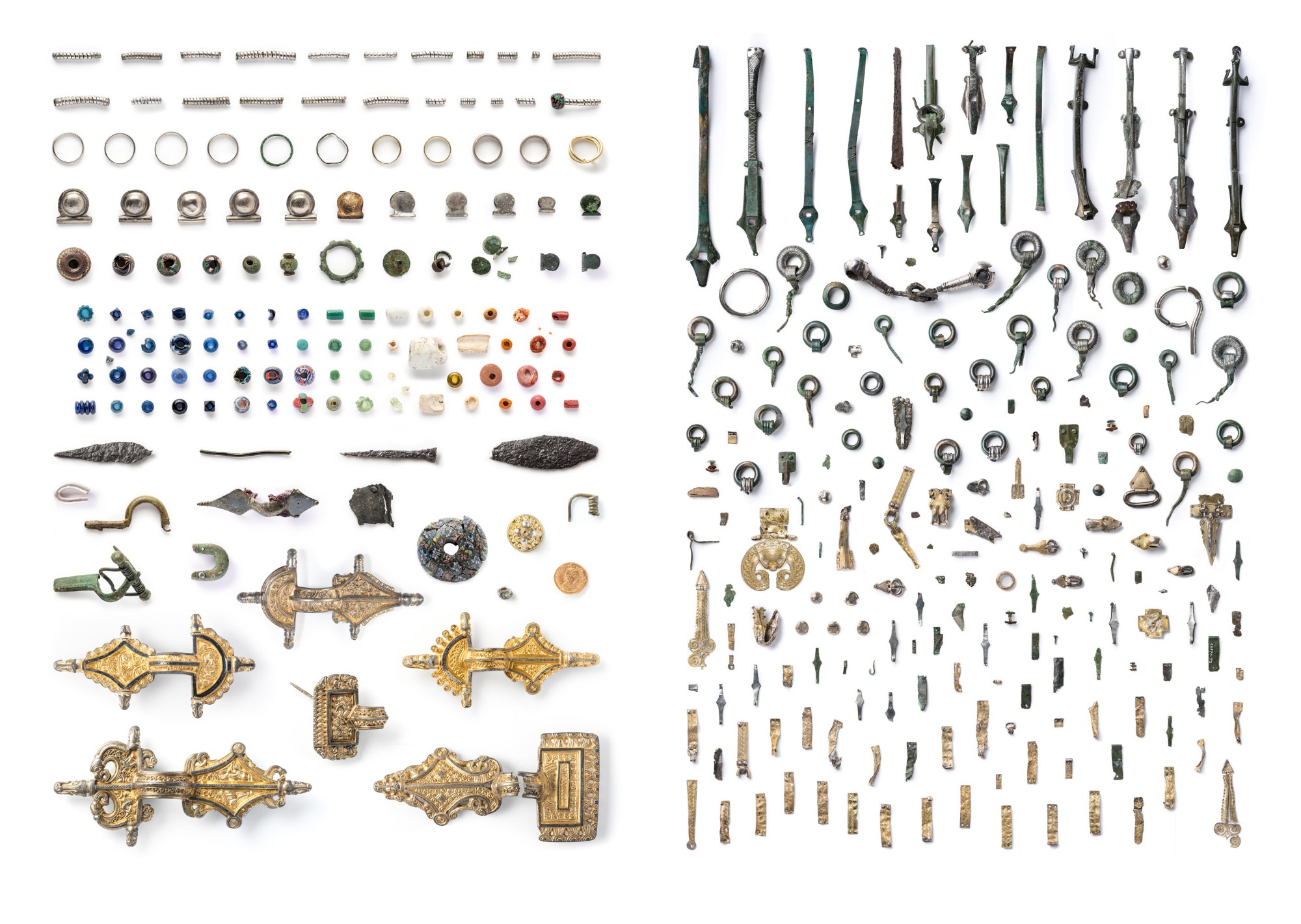
The PHOTARCH method originated during the 2014 excavation of Sandby Borg in Öland, Sweden. With the site projected to be excavated over many seasons, the team faced a methodological challenge: how to document artefacts in a way that would remain visually consistent from year to year, despite changes in equipment, staff, or environmental conditions. Existing approaches offered no reliable solution — so a new method was devised.
The method was later applied to the Sösdala horse gear from southern Sweden — allowing artefacts from a different time and context to be photographed using the same setup. This resulted in images that could be directly compared side by side, across sites and institutions, while maintaining a coherent visual language.
Tested at scale
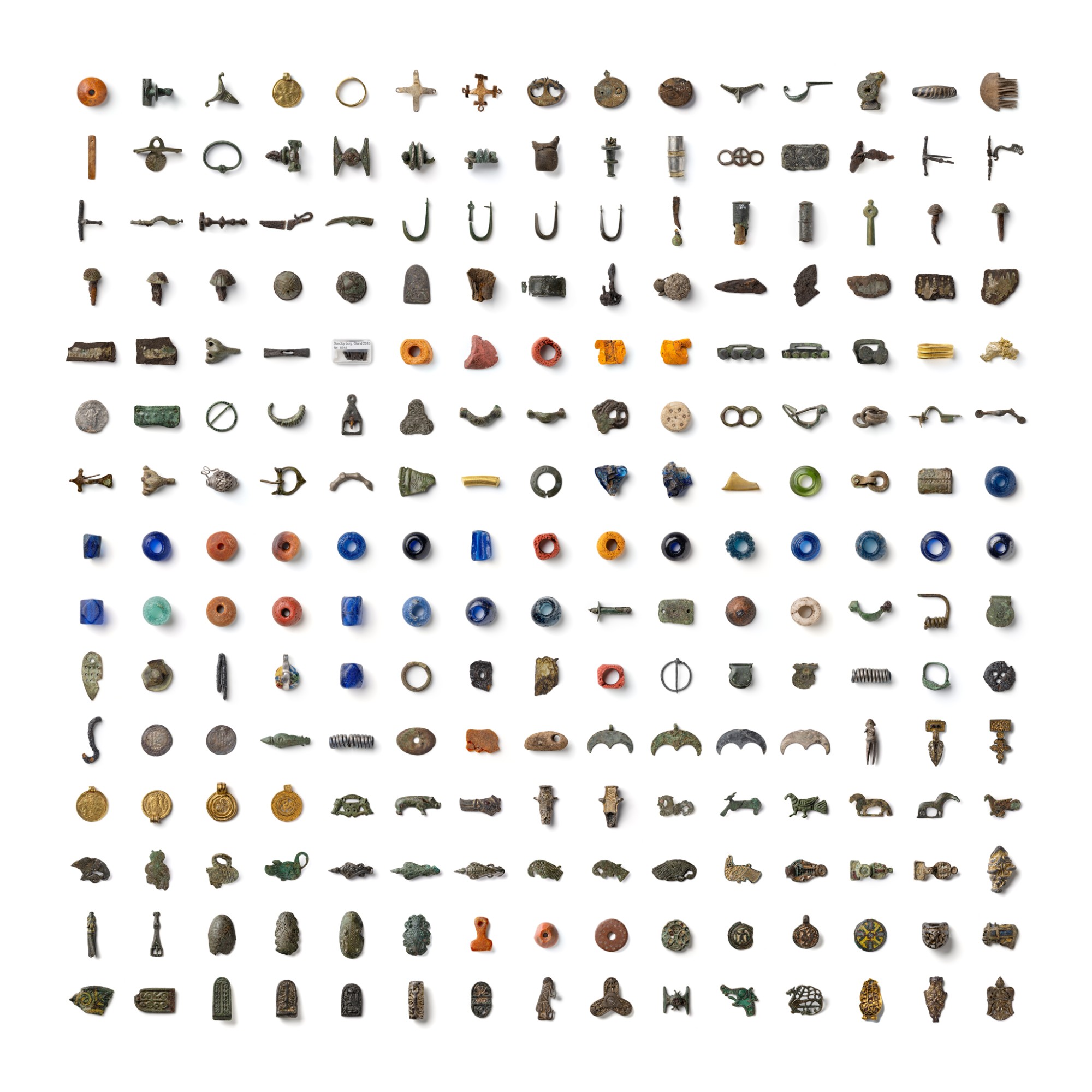
In 2022, the method was tested more rigorously when it was awarded the Fujifilm Challenge Grant. Over 200 artefacts were photographed at three institutions — Moesgaard Museum (Denmark), Kalmar County Museum, and Lund University Historical Museum (Sweden). The aim was to determine whether PHOTARCH could scale across varied institutional conditions and still produce consistent, comparable output. The resulting image sets demonstrated near-identical lighting, tonal range, and colour calibration, despite differences in equipment and handling environments.
Shown to the field
From 2023 the method was taken to the people it is meant for. It was presented at the annual meetings of the European Association of Archaeologists — with a booth of its own in Belfast in 2023, and in Rome in 2024 — to archaeologists who work directly with collections.
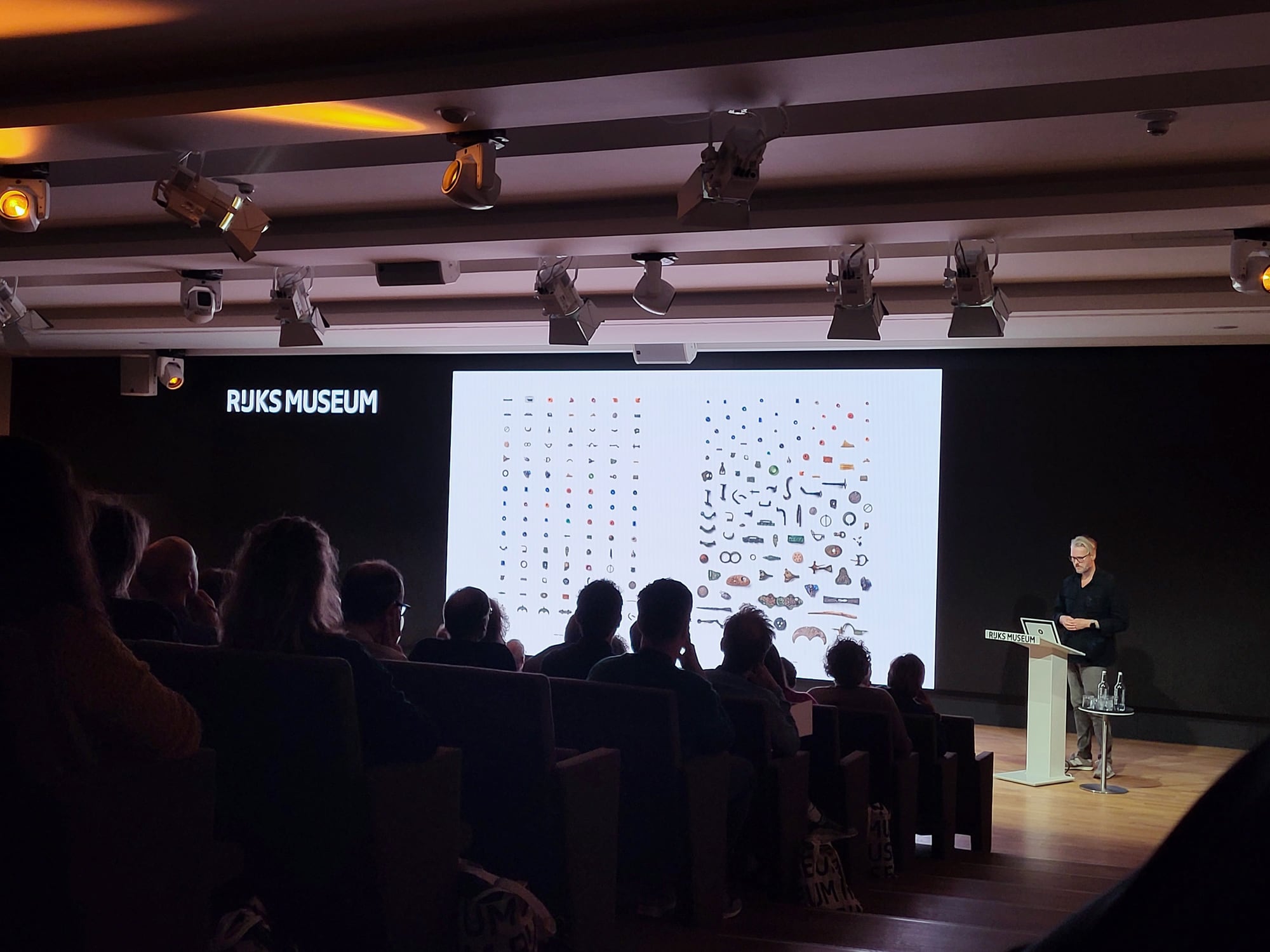
The most important of these was the 2and3D Photography conference at the Rijksmuseum in Amsterdam, in April 2024. The conference is known for its guidelines on photographing museum objects, and its audience is the photographers, curators and imaging specialists of museums, archives and research institutions — the people best placed to judge whether a method like this holds up.
The measurement came last
The method began as a way to make photographs look the same from one year to the next. What it could not do, for a long time, was say how large anything in them was.
A scale bar beside an object confirms the size of the scale bar. It lies on a different plane, at a different distance from the lens, and a reader who measures against it measures the wrong thing by however much those differ. The fix took a calibrated surface — the PHOTARCH board, with markers in its corners — from which a program can work out how many millimetres one pixel covers, correcting the perspective in the same operation. From 2026 that number is written into the file itself, so it survives being copied, resized and forgotten about.
That is the second half of the story, and the one that turns a consistent photograph into something you can measure from twenty years later.
One specification given away, and a method kept
PHOTARCH does not aim to replace existing digitisation standards such as FADGI or Metamorfoze, and it does not ask an institution to adopt a new imaging programme. It offers a domain-specific method tailored to the complexities of archaeological artefacts.
One small thing was missing, however, and that has been published rather than kept: a way for an image file to say how large a pixel is on the object. Image Scale Metadata is given away deliberately — specification under CC BY 4.0, reference library under MIT, in an organisation of its own without PHOTARCH in the name — precisely so that it is not ours. A format that only one archive can read is not a solution to the problem the method exists to solve. It is designed for photographers, curators, researchers, and students who want to produce meaningful, interoperable images with modest resources. Unlike high-end imaging pipelines that require expensive scanners or tightly controlled lab environments, PHOTARCH can be implemented with consumer-grade cameras and portable lighting kits — provided its principles are followed. It lowers the threshold for entry without compromising on precision.
Why now?
We are at a turning point in cultural heritage imaging. The growing volume of digital images, coupled with advances in machine learning, has created new possibilities — and new responsibilities. If we want archaeological photographs to be useful in twenty or fifty years, we must ensure that they are more than pixels: they must be data. PHOTARCH is part of that future. It provides not only a technique, but a philosophy of openness, comparability, and rigour in visual documentation. It is a small intervention with far-reaching implications for how we see, share, and study the past.
References
- guidelineFADGI (2023). Technical Guidelines for Digitizing Cultural Heritage Materials, 3rd ed. Library of Congress.
- guidelineMetamorfoze (2025). Preservation Imaging Guidelines, version 2.0 (first edition 2012). KB / Nationaal Archief.
- commentaryGrosvenor, B. (2024). Image fees and UK copyright law — a breakthrough.
- formatImage Scale Metadata (ISM) 0.1, draft specification, reference library and test files.