Developing the method at Sandby borg
The PHOTARCH method began at Sandby borg, the fifth-century ringfort on Öland excavated by Kalmar läns museum. The excavation was planned to run over many seasons, and the objects from each season had to be photographed so that they could be compared with those from every other — whatever camera, lights or people happened to be involved that year.
No existing approach gave that kind of consistency, so a new one was worked out during the excavation: a fixed light falling from the same direction, a white ground that keeps the object's shadow, and the same set-up for every object, season after season. The aim was not a beautiful picture but the same picture, so that a bead photographed one year could be laid beside a brooch photographed the next.
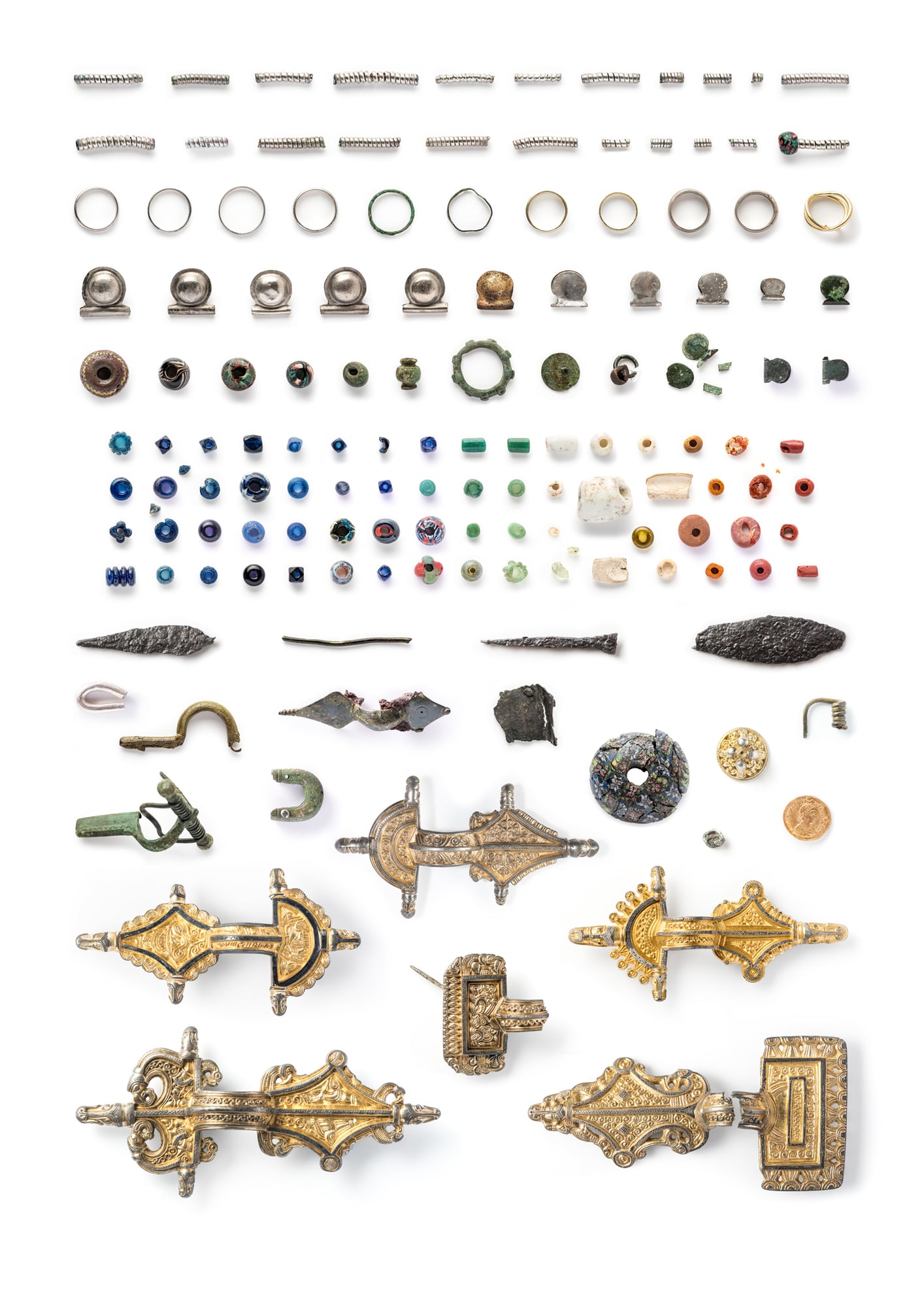
Everything PHOTARCH has become since — the guides, the archive, the measurement — grew out of that one practical question asked at Sandby borg.